PhD Researcher · IoT Security · ML · Sports Performance

Elsa López Pérez

I spend my days building formally verified cryptographic protocols for constrained IoT devices, and my evenings analysing wearable data to understand recovery, load, and performance.

I'm a PhD researcher at Inria & Sorbonne Université, a Level 2 certified triathlon coach, and an triathlon athlete. I'm looking for roles where rigorous data work meets human performance. This includes sports analytics, performance science, or applied ML in athletic and health contexts.

Rust · Embedded Formal Verification IETF Standardization Reinforcement Learning Deep Learning ARM Cortex-M Time-Series ML

Selected Projects

Time-Series ML · Personal Research
Python pandas FastAPI HRV · Sleep

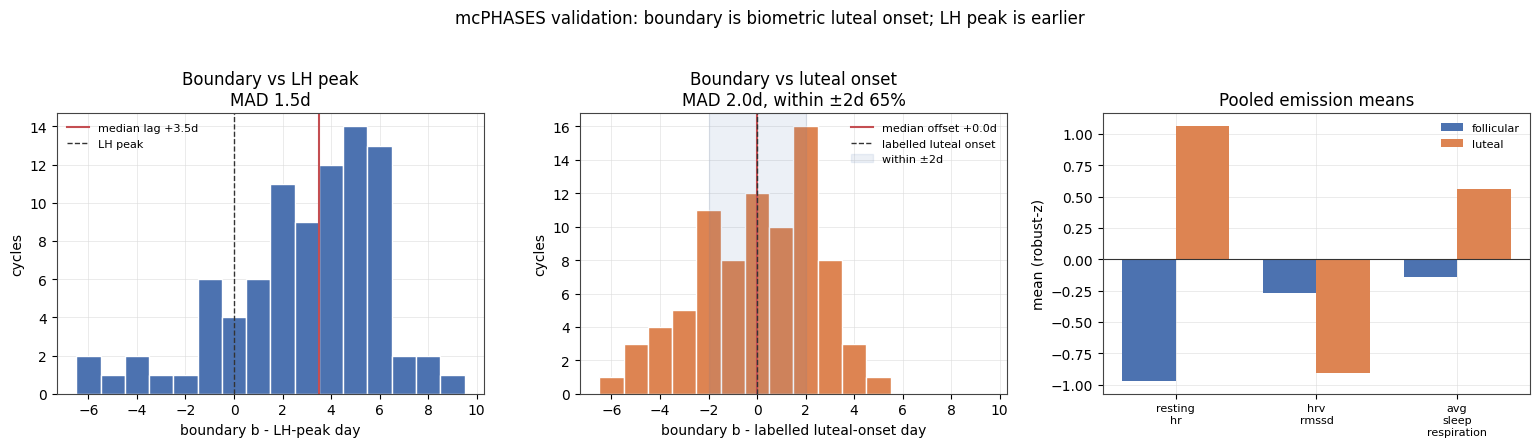
Physiological Cycle Phase & Ovulation Prediction from Wearable Data

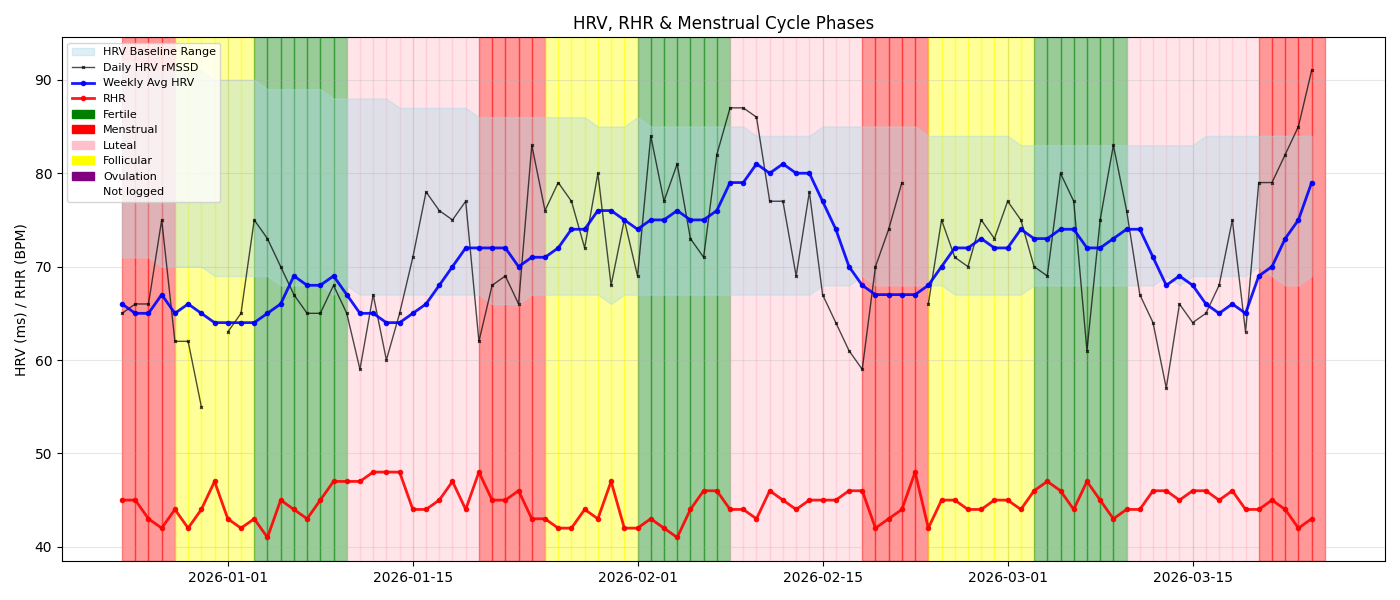
An end-to-end personal research project: built a privacy-preserving platform to collect longitudinal wearable data (heart-rate variability, resting HR, sleep architecture, stress, training load) from multiple participants, and a multi-class time-series pipeline to model physiological cycle phases — and detect ovulation — from continuous biosignals.

  • Built and deployed a participant data-collection system (FastAPI web app + packaged cross-platform desktop app) that gathers wearable data without ever storing user credentials, scaling the study beyond a single subject
  • Rolling-window feature engineering — lag features, past-only rolling means, and day-to-day deltas — capturing temporal patterns across HRV, sleep stages, and training load
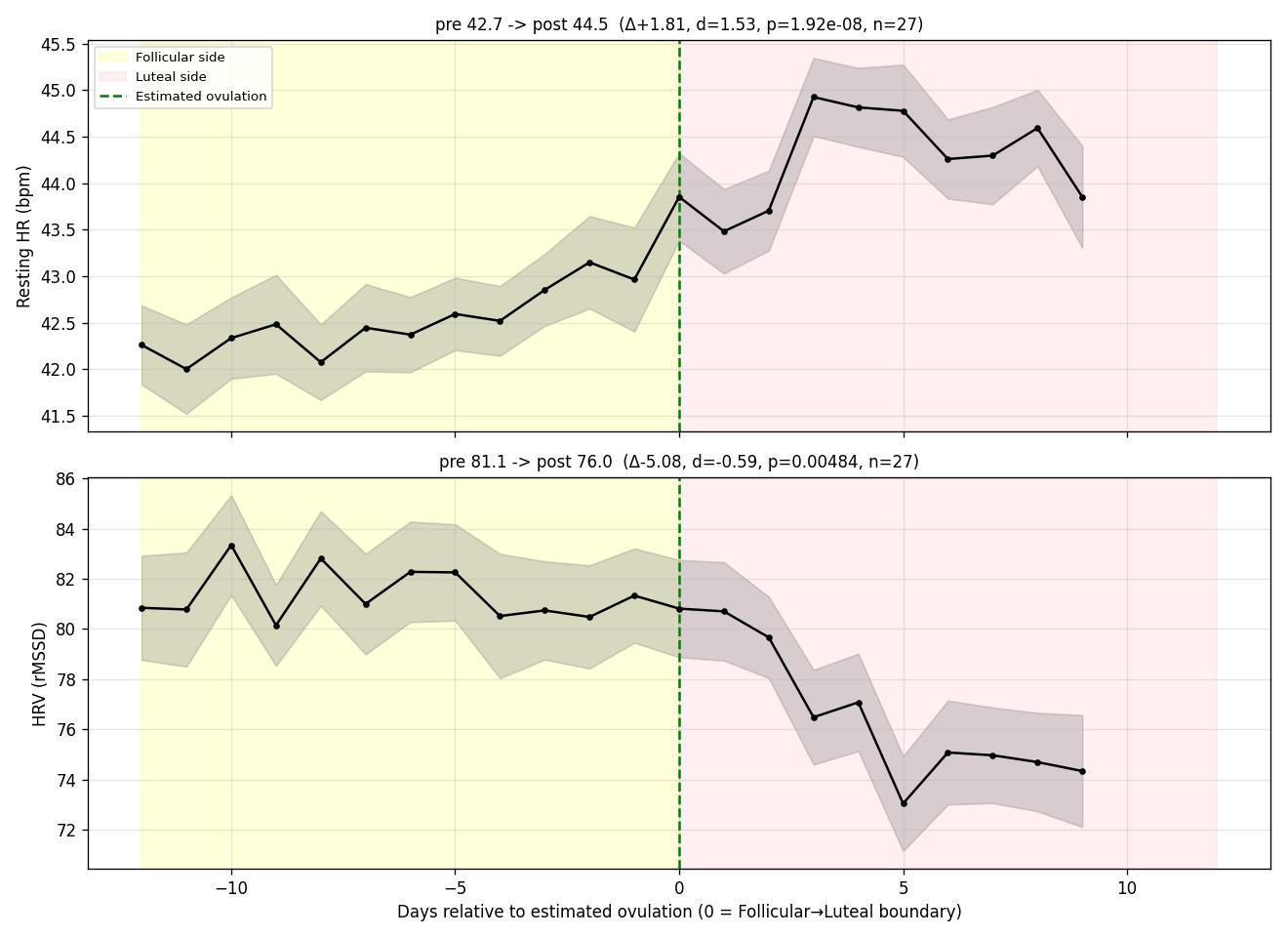
  • Statistically validated that the follicular - luteal transition (ovulation) is detectable from resting HR and HRV (cycle-aligned analysis, paired tests, large effect sizes)
Cryptography · IoT Protocol
Rust no_std IETF LAKE

EDHOC-PSK — lakers crate

Core contributor to lakers, the reference Rust implementation of the EDHOC lightweight authenticated key exchange protocol (RFC 9528). I designed and implemented the Pre-Shared Key (PSK) authentication extension, working directly with IETF LAKE Working Group engineers to ensure interoperability across implementations and production readiness for constrained IoT hardware.

  • PSK extension enables EDHOC on devices with no PKI infrastructure, reducing handshake overhead
  • Supports both software backends (RustCrypto) and hardware-accelerated backends (STM32 PKA, Nordic CC310) through a unified abstraction layer
  • no_std, zero heap allocations — runs on ARM Cortex-M with kilobytes of RAM
  • C and Python bindings shipped alongside the core library
Formal Verification · Security Proofs
Tamarin ProVerif SAPIC+ Python

Formal Security Analysis of EDHOC-PSK

Symbolic security proofs for the EDHOC-PSK protocol extension, modelling authentication, secrecy, anonymity, and unlinkability under advanced adversary models, including post-quantum Save-Now-Decrypt-Later (SNDL) attackers. Published at ACM ASIACCS 2026.

  • Protocol models written in SAPIC+, automatically compiled to both Tamarin and ProVerif for cross-tool verification
  • Identified concrete authentication and identity-protection weaknesses under SNDL adversaries, fed back into the IETF standardization process
  • Dockerised automation scripts enable one-command reproduction of all proof results
  • Extended to 5G network attachment scenarios and remote attestation variants (separate repos)
Embedded Systems · Hardware Cryptography
Rust STM32 nRF54 ARM Cortex-M

embedded-cal — Formally Verified Cryptographic Provider

Co-designed with Cryspen a reusable Rust cryptographic abstraction layer that gives uniform access to hardware-accelerated and formally verified software primitives across ARM Cortex-M platforms. Received the Best Paper Award at SPT-IoT 2026.

  • Unified HAL over STM32 PKA, AES-256, SHA-256 (STM32WBA55) and Nordic CryptoCell/CC310 (nRF54) — no code changes needed to switch targets
  • Benchmarked execution time, flash usage, and power consumption: hardware acceleration delivers significant speedups over software-only implementations at the same security level
  • Memory safety and secret-independence guarantees preserved end-to-end, verified against the formally verified HACL* cryptographic library
  • Bare-metal STM32 driver experiments publicly available in the companion repository
Reinforcement Learning · Robotics
Python ROS Gazebo PPO

Multi-Robot Navigation with RVO-Shaped RL (Nokia Bell Labs)

At Nokia Bell Labs I integrated and re-trained a PPO-based multi-agent navigation policy within a full ROS robotics stack, then led the simulation-to-real transfer analysis to close the gap between Gazebo high-fidelity simulation and physical robot deployment.

  • Re-trained the policy with a Reciprocal Velocity Obstacle (RVO) shaped reward to improve collision avoidance in dense multi-robot scenarios
  • Diagnosed and resolved sim-to-real failures caused by sensing noise and actuation delay — improved navigation success rate to 98% in randomised high-fidelity scenarios
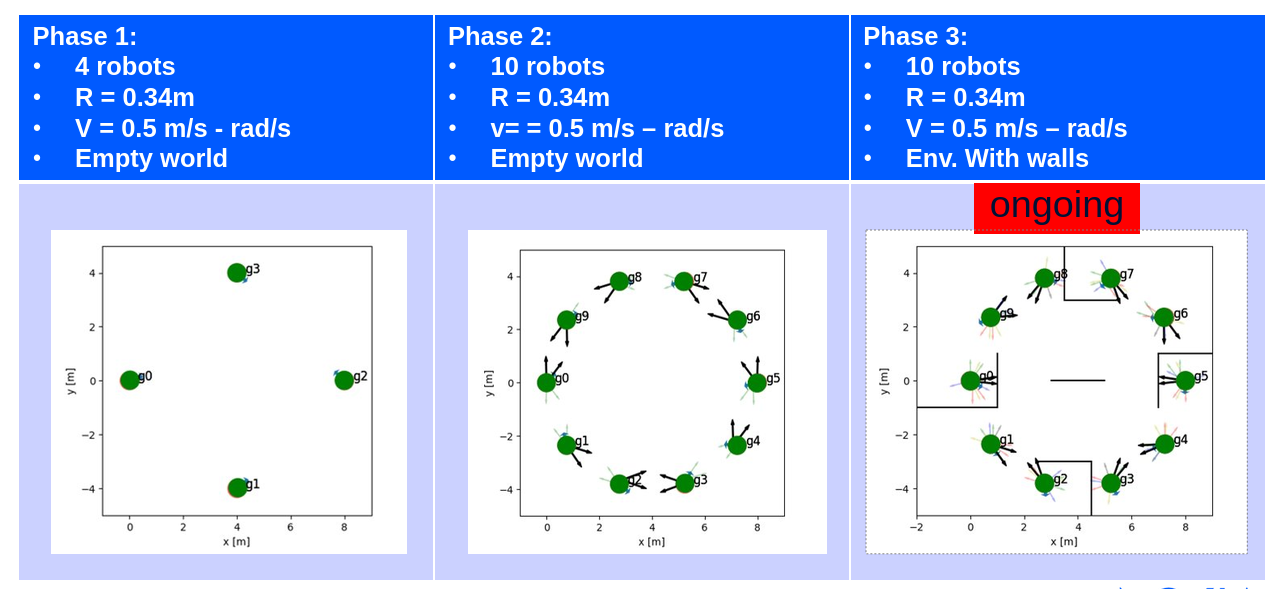
  • Designed multi-stage curriculum training pipeline (4 robots → 10 robots → 20 robots) to progressively increase task difficulty
  • Validated policy generalisation across circle and random initialisation scenarios with up to 20 simultaneous agents
Deep Learning · Computer Vision
PyTorch scikit-learn OpenCV

Semi-Supervised Deep Learning for Pharmaceutical Imaging (IBISC)

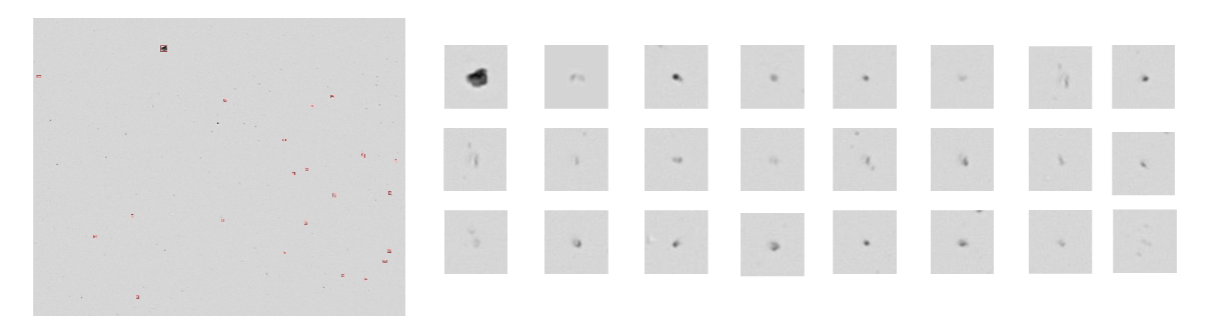
Built a semi-supervised classification pipeline for automated quality control of microscopic flow imaging (MFI) particle images in a pharmaceutical manufacturing context, addressing a dataset of over 190,000 images with significant class imbalance and label noise.

  • Convolutional Variational Autoencoder (VAE) trained to learn compact latent representations combining texture, shape, and geometric features
  • Semi-supervised approach leverages the large unlabelled pool — critical when expert annotation is expensive in regulated pharmaceutical environments
  • Improved binary classification accuracy from 70% to 86% after systematic class-imbalance correction and mislabelling audit
  • Evaluated with confusion matrices, PCA, t-SNE, and reconstruction loss to understand failure modes and latent space structure
High-Performance Computing · Parallel Algorithms
C MPI OpenMP Python

Parallel Dijkstra for HPC Clusters

Parallel implementations of Dijkstra's shortest-path algorithm for high-performance computing environments, comparing serial, OpenMP (shared-memory) and MPI (distributed-memory) strategies on randomly generated graphs and benchmarking their scaling on a computing cluster.

  • Three implementations — serial, OpenMP, and MPI — sharing a common graph-generation and benchmarking pipeline
  • Python tooling to generate random graphs and visualise results, with shell scripts for cluster job submission via qsub
  • Evaluated parallel speedup and scaling behaviour across varying graph sizes and core counts on an MPICH cluster
Data Mining · Recommendation Systems
Python Jupyter Query Mining

Query Recommendation & Importance Mining

A data mining project in two parts: a query recommendation system that suggests relevant queries to users, and a method to quantify the importance of a query to a given user — applied to a real-estate (house) search dataset.

  • Built a query recommendation engine from user–query interaction data
  • Designed a scoring method to estimate how important a query is to each user
  • Modular notebooks with reusable auxiliary and database-handling functions over JSON-backed data
Machine Learning · Statistical Theory
Python Gaussian Processes PAC-Bayes

Supervised Learning based on Gaussian Processes

Bachelor's thesis exploring the theoretical foundations of Gaussian process regression, its connection to kernel-based methods, and statistical regularization. Grounded theoretical results in experiments on real-world data.

  • Studied PAC-Bayesian performance guarantees for supervised learning, connecting theory to practice
  • Analysed the equivalence between Gaussian process regression and kernel ridge regression
  • Applied GP regression to a 7-DOF anthropomorphic robotic arm: mapping a 21-dimensional input space to the corresponding 7 torque outputs
  • Validated theoretical results through experiments on real-world datasets

Experience & Education

Inria · Sorbonne Nov 2023 – Dec 2026
Paris, France

Inria – Sorbonne Université

PhD Researcher — Secure IoT Protocols

  • Designed, implemented, and formally verified the EDHOC-PSK authentication protocol for constrained IoT devices using SAPIC+
  • Identified authentication and identity-protection weaknesses under advanced adversary models including post-quantum attackers
  • Benchmarked performance and memory footprint on ARM Cortex-M platforms
  • Contributed protocol specifications directly to the IETF LAKE standardization process
Nokia Bell Labs Mar – Aug 2023
Paris, France

Nokia Bell Labs

Research Intern — Reinforcement Learning & Multi-Robot Systems

  • Integrated and re-trained a PPO-based multi-agent navigation policy within a ROS robotics stack
  • Led simulation-to-real transfer analysis, resolving deployment failures from sensing noise and actuation delays
  • Improved navigation success rate to 98% in randomised high-fidelity simulation
IBISC · Paris-Saclay May – Aug 2022
Évry, France

IBISC – Université Paris-Saclay

ML Intern — AI for Pharmaceutical Imaging

  • Built a semi-supervised deep learning pipeline for automated classification of 190k+ MFI particle images
  • Improved binary classification accuracy from 70% to 86% by addressing class imbalance and dataset mislabelling
Education 2016 – 2026

Academic Background

PhD · Master · Double Bachelor

  • PhD in Secure Protocols — Sorbonne Université & Inria (2023–2026)
  • EIT Digital Master in Data Science & AI — Université Paris-Saclay & Università di Trento (2021–2023)
  • Double Bachelor, Mathematics & Physics — Univ. of Valladolid & Univ. of Dundee, Erasmus (2016–2021)

Selected Publications

↗ View full list on Google Scholar

2026

embedded-cal: A Formally Verified Cryptographic Provider for Embedded Platforms 🏆 Best Paper

Elsa López Pérez et al. — SPT-IoT 2026

2026

Formal Verification of EDHOC-PSK: A Symbolic Approach

Elsa López Pérez et al. — ACM ASIACCS 2026

2025
2024

EDHOC Authenticated with Pre-Shared Keys (PSK)

Elsa López Pérez et al. — IETF Internet Draft 2024

2024

EDHOC is a New Security Handshake Standard

Elsa López Pérez et al. — IEEE Computer 2024

Skills

Languages

Rust (embedded cryptography), C/C++ (microcontroller drivers), Python (ML pipelines)

ML & Data Science

PyTorch, scikit-learn, TensorFlow, time-series analysis, multi-agent RL, VAEs, PPO

Formal Methods

Tamarin Prover, ProVerif, SAPIC+, symbolic security analysis, protocol modelling

Embedded & Hardware

ARM Cortex-M, STM32WBA55, nRF54, bare-metal Rust, hardware crypto accelerators

Robotics

ROS, Gazebo simulation, sim-to-real transfer, multi-robot coordination

Standardization

IETF LAKE Working Group contributor, RFC 9528 (EDHOC), CoAP, COSE, CBOR, OSCORE

Languages spoken

Spanish (native), English (proficient), French (proficient), Italian (intermediate)

Beyond the terminal

Professional saxophone diploma · Level 2 Triathlon coach · Triathlon athlete